


"Kersploosh!" (The Gift of Imagination)
We digest these moments with our imagination until we can recall it, not only knowing it with our brains, but feeling it in our guts.
Freeze time when I have leapt from the warm pine dock but before I’ve kersplooshed into the cool summer water of Wyman Pond. That’s the happiest I’ll ever be. What’s your freeze-frame moment?
Summers in New England are not too hot, but as the clouds roll past the filtered sun your skin glows, is cool, and glows again. The air is heavy with humidity until the soft wooshing of pines draws a chill from the forest floor with all the scents of fern, mushrooms and last season’s long needles which have soaked up the snow and begun to break down in a soft carpet of orange-gold and black. And all I want to do is swim.
So I rocket, barefoot, down the muffled slope, pause to pick a low-bush blueberry at the base of the pines where the sun finds a tunnel to nourish their growth, and off again to the murky shore. Scan for sunfish and perch and observe. Then with one warm, piney rush, I’m down the runway of the slatted dock, bump, bump, crouch and leap! Freeze frame.
I am welcome here. The cove is full of love, the community of church and friends. A pond made for paddling all day, and scaring the ducks. I test my bravery in the height of my jump, or the true and speedy arc of my backdive. And there is always someone there to look and say, “Great job!”
This is reading the story of my life with my imagination. Immersed, I can access not just what happened but what it meant. And having absorbed that meaning, I can let that moment continue to change me now. I return to that mid-air moment when, in a dark place, I need to remember what careless joy feels like – not just to know it with my brain, but to feel it in my guts.
This is why the Holy Spirit wrote us stories. We call them “histories” and “the Gospels”, but they are not records of cold facts. We have four Gospels because four people needed us to see what happened as they remembered, as they sifted through the story with their imaginations. Not just what happened, but what it meant.
The miracle and gift for us now is that we are invited to be immersed with the Holy Spirit in the story, so that, absorbing the meaning, we can continue to be changed now. Imagine immersing yourself – for example – in Mary, Martha and Lazarus’ house, sitting on the floor, passing a dish of dates to someone near you, looking up at Jesus’ face while he answers curious questions. How does he feel about you being there? What would you ask him? (Maybe ask him that question right now?) We digest these moments with our imagination until we can recall it, not only knowing it with our brains, but feeling it in our guts.
The collect for the word, from the Book of Common Prayer, runs like this:
Blessed Lord, who has caused all holy Scriptures to be written for our learning; grant us that we may so hear them, read, mark, learn, and inwardly digest them; that by patience and comfort of your holy Word, we may embrace, and ever hold fast the blessed hope of everlasting life, which you have given us in our savior Jesus Christ.
Signpost Inn Ministries can help you with that.

Sign Up for Our Next Webinar - "Reading The Gospels with Your Imagination!"
C.S. Lewis described something about our experience with God that many of us feel in our bones but rarely name. In reflecting on why he wrote the Narnia stories, he observed:
"I thought I saw how stories could steal past a certain inhibition which had paralysed much of my own religion in childhood."
Elsewhere he argued that:
"...reason is the natural organ of truth, but imagination is the organ of meaning."
In other words, he knew that we don't truly grasp something until it lives in our imagination. Stories bypass our defenses and connect with our souls before we can intellectualize our way around them.
God can teach us with facts. But he meets us in our imagination.
Building on Lewis' insights, we've created a new Workshop that will teach you how to deeply engage with the Gospels, and meet Jesus, using your imagination.
In this workshop you'll:
- Learn how imagination is a God-given tool for encountering him in Scripture.
- Walk through a simple 5-step method of reading with your imagination.
- Practice the method and ask your questions
- Leave with a complete worksheet and list of passages to start with.
We hope you can join us! Saturday, June 13| 11:00–12:30 PM Mountain Time.
Provisions for the Road

Signpost Inn Podcast - Reading the Gospel with Your Imagination
In this episode, we dive into the topic of our very popular webinar on “reading the Gospels with your imagination” What is it, what do we teach, and we answer some of the big questions and concerns people have been asking.
Whether you're wondering how reading the Gospels with your imagination works, concerned about staying grounded in Scripture, or curious about how this practice can be a powerful prayer practice, this is the episode for you!
Food for Thought
Things the team found interesting this week, no endorsement implied.
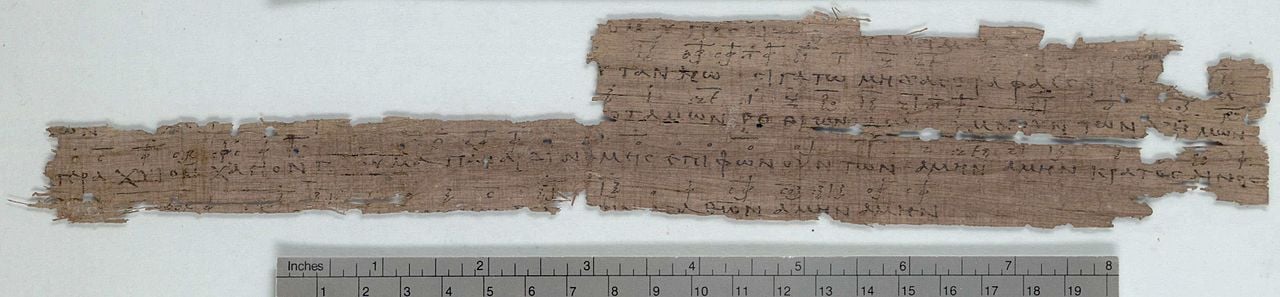
The Earliest Hymn With Its Ancient Greek Music
By Gene Veith at Cranach Blog of Veith
Read about “the earliest known manuscript of a Christian Greek hymn to contain both lyrics and musical notation” and listen to people sing it!
Better Than a Roadmap
By Todd Brewer at Mockingbird
“We are incessantly told that we must make something of ourselves, that our lives must matter, that we must be whoever we want to be, that we must make our own way amid infinite possibilities. This freedom, however, comes with a cost… On a journey of infinite possibility and infinite judgment, it is easy to feel lost, to believe there is no good option.”
Declining societal religious norms are linked to rising youth anxiety across 70 countries
By Eric Dolan at PsyPost
“When examining specific values globally, the scientists found one very consistent pattern. Across all 70 nations, a decrease in the societal emphasis on raising children with religious faith was linked to an increase in youth anxiety. When cultures placed less importance on religion over time, young people experienced more anxiety disorders.”
