

Bringing My Receipts to Church
I often feel like I need to bring the receipts of my good works from the past week to God on Sunday.
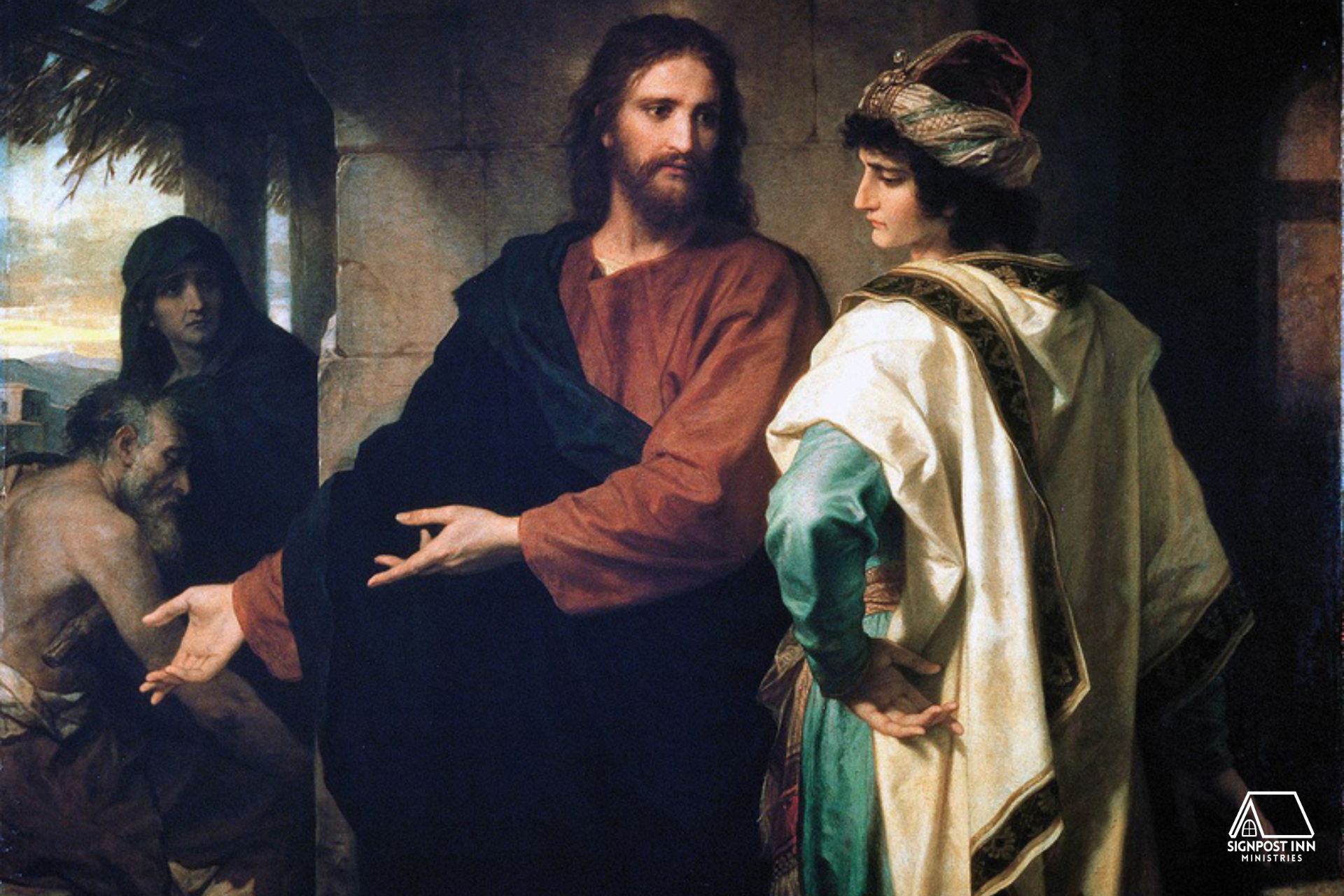
One of my favorite Gospel stories is Jesus’ encounter with the rich young ruler in Mark 10:17-31. It perfectly illustrates the way I feel sometimes about going to church. (Feel free to pause here and go read the story! I’ll wait for you!)
Before we judge the man too quickly, it’s important to realize that he was probably being sincere. He wasn’t lying about his piety. He had kept the law since his youth. In that day, much like in our own, his status and wealth were evidence of it. Blessings follow obedience (see Deut 28:1-14; Psalm 1; Proverbs 2; and many others).
Understanding this makes sense of the disciples’ reaction. If it’s impossible for this pious, wealthy man of good standing to enter the kingdom of God then, “Who can be saved!?”
Bringing my receipts
Perhaps you already see the problem: just like that young man — and the disciples — I have the entirely wrong understanding of God in my head.
I often feel like I need to bring the receipts of my good works from the past week to God on Sunday.
With those in hand, I can ask with a kind of false humility, “See, I’ve done all these things, what [else] do I need to do to inherit eternal life?” (Nothing right?!)
Perhaps the man was genuinely expecting Jesus to say, “My son, you’ve done enough already! Welcome to the club!” At the very least, I know that’s what I’m hoping Jesus will say!
Of course, that’s not what Jesus said.
Instead, Jesus looked at him with deep love and compassion and said, “You lack one thing: Go, sell all you have and give to the poor, and you will have treasure in heaven. Then come, follow me.”
Ooof! It’s as if Jesus had said, “Your receipts aren’t accepted here. Your status is meaningless. All your wealth is a noose around your neck. Give all that stuff up! And trust me to take care of you. Trust that my word is the only thing that makes you right with God.”
That’s the offense of the gospel! It’s a blow to my self-determination. It exposes my vain confidence that somehow I don’t need help, that I can do it on my own.
And far too often my heart reacts the same way that the rich young man reacted: “But he was dismayed by this demand, and he went away grieving, because he had many possessions.”
Truth be told, I don’t want to give up my self-reliance. I don’t want to admit that we’re all beggars before the Lord. I don’t want to admit that my receipts aren’t worth anything.
So really, “Who can be saved?”
If my receipts are more likely to damn me than save me. If the pious, respectable members of the community are no better than the beggars, what hope is there? Is God okay with the beggars?!
You’ve really got to use your imagination to understand this story. You’ve got to see the look of love on Jesus’ face. You’ve got to hear the tenderness in his voice, and feel the gut-level compassion he has for this exhausted, burdened young man.
Then you can understand what Jesus means when he looks at his disciples and says, “With man [salvation] is impossible, but not with God, because all things are possible with God.”
ALL things are possible with God!
If God wills, he can say to a man with a leprous body and soul, “Be made clean.” And immediately the leprosy leaves him! (Mark 1:41b-42).
If God wills, he can say to a man with a paralyzed soul and body, “Son, your sins are forgiven.” And they are! (Mark 2:5).
And the really, really, good news is: God does will it! (Mark 1:41a).
And so even I, a man exhausted from carrying a load of false piety, can be saved. I am forgiven! I have been brought into the kingdom of God!
The load is lifted! I can burn my receipts and follow Jesus all the way to the resurrection!
Amen.
Signpost Inn Phone & Desktop Wallpapers
Check out our latest creation - Signpost Inn wallpaper for your phone and desktop! There are three different designs to choose from, featuring a different key principle for Signpost Inn.
Head to our website by clicking the button below, and get yours today!
Provisions for the Road
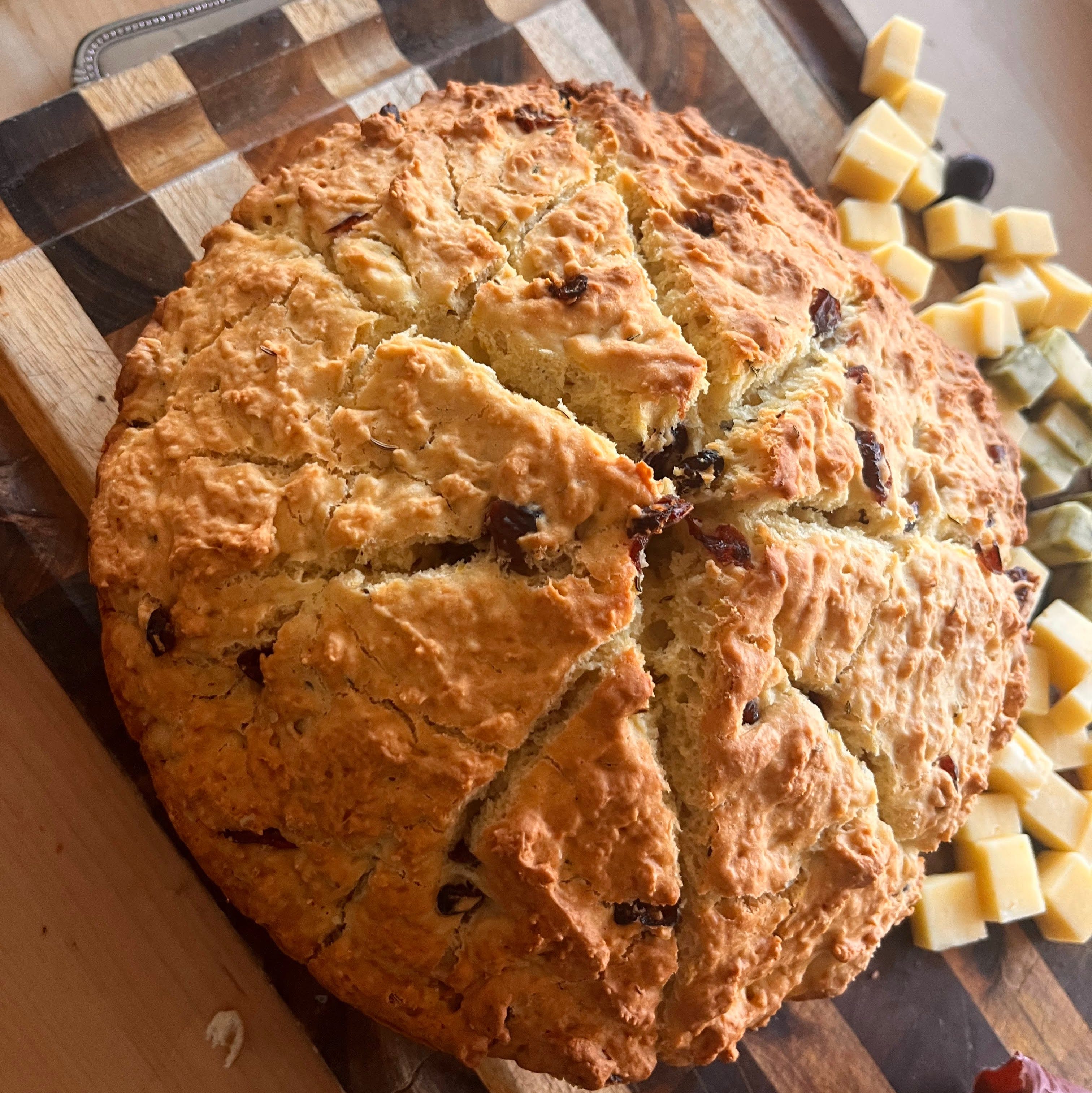
"Hello, bread alone" - A poem by Liv
"I am inhabiting the immediate and leaving gratitude for another day. I’m letting what is be what is. I want the God’s-eye-view. The one that looks and says, 'It is good.'
Without agenda or anxiety - the welcome of what is becomes delight in what is. So here I go: Hello, bread alone..."
Food for Thought
Things the team found interesting this week, no endorsement implied.

5 Words That Quiet Your Loudest "What If" Worries
By Jeffrey Bernstein Ph.D. at Psychology Today
ACT (Acceptance Commitment Therapy) teaches people to “de-fuse” their thoughts from their identity. It’s a remarkably powerful tool to help us not get stuck in our anxiety, depression, or any other negative state. The insight is also rather Christian: you can’t make negative thoughts stop, but you can learn to give them less power over your actions.
AI and the Meaningless Gap
By John Nosta at Psychology Today
The question isn't “How can we compete with AI?” It's “Why do we keep measuring ourselves by a scale that was never designed for us?” AI is not a better intelligence, it’s a totally different thing altogether. A kind of “anti-intelligence.”
The History of Markdown: A Prelude to the No-Code Movement
By Dawid Bednarski at Taskade
If you’ve encountered that strange text formatting full of “#’s” and “**”, then you’ve encountered Markdown. A simple way of marking up text that has exploded in popularity especially with the rise of AI that operates exclusively on unformatted text. Read about its fascinating history, starting as a way to solve a simple problem of writing blogs without having to learn to code, it’s quickly becoming the dominant way to communicate human meaning in a machine world without bold and italics and hierarchical structure.
